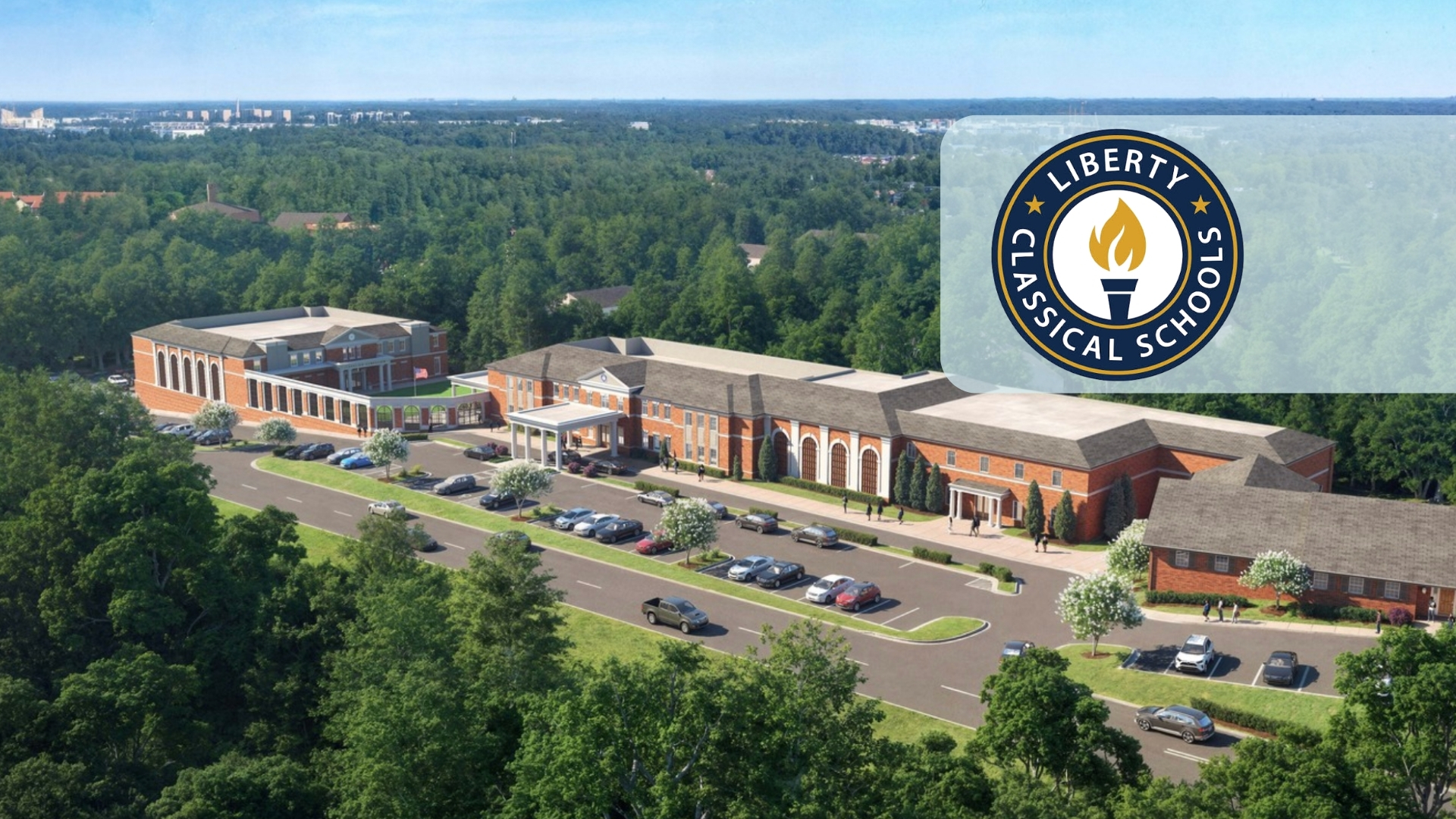
Liberty Classical Schools has used the same safety platform for roughly a decade, across three campuses and multiple iterations of school leadership.
A good safety system proves itself quickly. Schools know after the first drill whether it works. What a decade demonstrates is something else: that it kept working as the schools changed around it.
What "Grows With You" Actually Means
Scalability is a common word in this space, and it means different things depending on who's using it. In practice, for a school thinking long term, it tends to come down to a few concrete things.
Replication. When a new location opens, does the safety infrastructure come with it, or do you purchase and configure it again from scratch?
Visibility. Can one person see readiness across every location without traveling to each one?
Shared language. Do drill protocols mean the same thing in every building, so that a conversation between two operations leaders starts from common ground rather than translation?
These questions don't require a growth plan to be finalized. They're most useful early, while the answers can still shape a decision rather than react to one.
A Deliberate Growth Model in Georgia
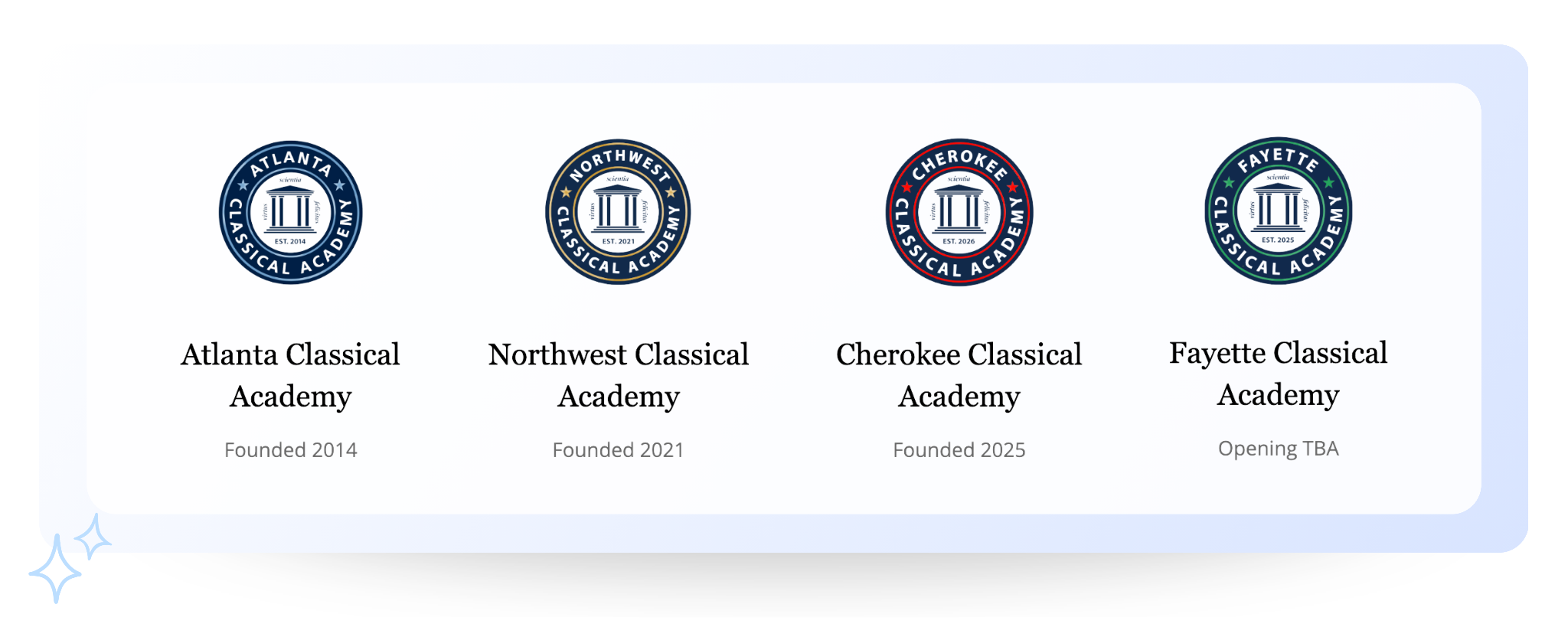
Liberty Classical Schools offers a useful window into what this looks like over a long horizon. Liberty is a public charter school system in Georgia serving students in grades K-12. Rooted in a classical education philosophy, Liberty's mission centers on forming knowledgeable, virtuous citizens through traditional learning and civic responsibility, and it has drawn steady support from families across the state. Its first school opened in 2014, its second in 2021, and its third in 2025. Each opens as a K-6 campus and adds one grade per year until it reaches its full K-12 configuration, a growth model built for sustainability.
Kent Messini, Director of Operations for the network, sits at the center of that operationally. His responsibilities span compliance, state law, emergency preparedness, vendor partnerships, technology, and state nutrition and nursing programs. As he describes it, his job is to handle what happens outside each campus so the schools don't have to think about it.
The governance model differs from an independent school's, but the decision Liberty faced is the same one any school makes when it chooses safety infrastructure.
A Decision Made Once, Carried Forward
Liberty's relationship with Ruvna started at a single school. Their oldest campus has used Ruvna for roughly a decade, through multiple iterations of school leadership and multiple operations directors at that campus. When the second school opened, and again when the third launched, the platform came with it.
Kent has been hands-on in that expansion, leading implementation and initial staff training at two of Liberty's three campuses.
Today, Liberty uses Ruvna Accountability across all three campuses for the full range of drills they run, including evacuations, reverse evacuations, severe weather scenarios, and intruder drills. Kent has visibility into all three sites at once, even when he isn't physically on campus. They also use Ruvna 911 Connect, which meets Georgia's requirement that schools maintain a direct connection to emergency services, from the same app staff already have open during a drill.
The operational value there is less about oversight than about shared vocabulary. When every campus runs the same drill structure inside the same system, a conversation between two Operations Directors starts from common ground. Terms mean the same thing. Steps happen in the same order. A question asked at one campus produces an answer that's useful at another.
That continuity also shows up in staffing transitions, which any school leader knows are a fact of life. When a new Operations Director joins Liberty, onboarding becomes a peer-to-peer conversation with a colleague who has been using the same system for years, rather than a from-scratch orientation. The learning curve shortens because the institutional knowledge is already distributed across the network.
What a Shared System Makes Possible
A single platform offers an advantage that only shows up after a few years, and it's easy to miss when evaluating options on a feature list.
When one campus finds a better way to use the system, whether that's adding a document to a drill category or refining an icon or alert color so it reads more clearly at a glance, that improvement can be adopted everywhere. Because all three campuses operate in the same environment, nothing needs to be translated.
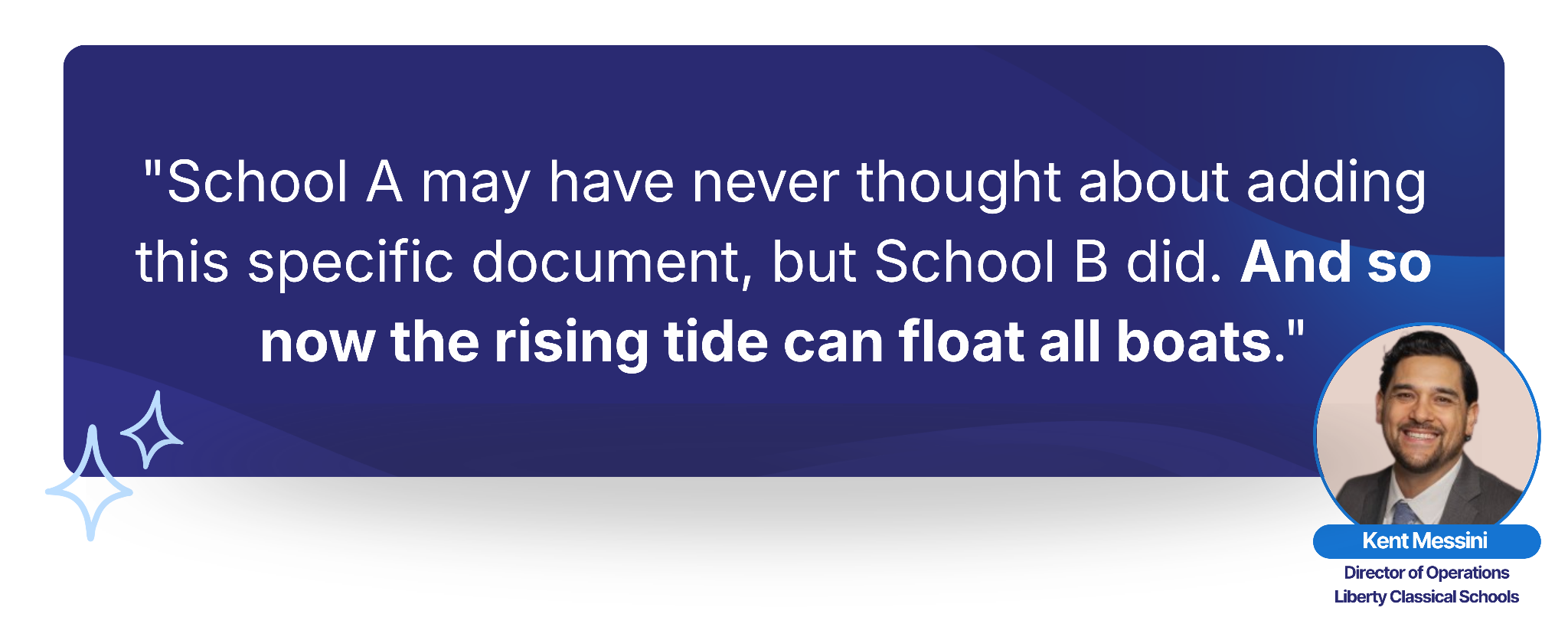
Separate systems at separate sites don't produce that. Each location improves on its own, and the lessons stay local. A shared environment turns one campus's experience into everyone's.
The Adoption Question Vendors Rarely Get Asked
A platform that scales technically still has to scale with people, and that's where the number of systems matters most.
Kent approached faculty adoption deliberately at Liberty. Classical schools tend to minimize technology in the classroom by design, and some of Liberty's teachers came from schools where phones weren't part of the classroom at all. Introducing a phone-based safety tool in that environment requires a clear and compelling reason.
In Kent's experience, what made that conversation manageable was that there was only one thing to introduce.
"If you're saying, in this one app, it's hard for someone to say, well, that's too much for me," Kent said. "But if it was six apps or six different things, then it's a lot harder to do that."
Faculty patience for new systems is finite, and every additional platform spends some of it. A school opening a second campus is asking its newest staff members to absorb a great deal at once. The fewer separate tools staff must learn alongside everything else, the more likely the safety piece is to take hold.
Liberty's staff also practice scenarios that reflect real conditions, such as taking accountability for students outside their own classroom or working through a drill without their phone in hand. That kind of practice builds the muscle memory that matters, and it's the same practice at every campus.
Evaluating for the School You Might Become
None of this requires certainty about the future. It requires asking a slightly different set of questions now.
- Can this platform handle multiple sites, or would each one need its own setup?
- Can one person see readiness across everything we operate, whatever that ends up including?
- How much of what makes this work lives in the system, and how much lives in a specific person's head?
A school whose needs never change loses nothing by having asked. Most schools' needs do change, and the ones that asked early will have saved themselves a decision made under pressure.
Liberty has worked with the same safety platform for roughly a decade, through multiple leadership changes and real shifts in what schools needed from it. The system kept pace instead of being replaced. That's the outcome worth aiming for, whatever a school's next few years look like.
For a fuller picture of how Liberty coordinates emergency preparedness across a growing network, including how they approached Georgia's direct 911 connectivity requirements, read the Liberty Classical Schools case study.
Latest articles

The Independent School Guide to the Standard Response Protocol and Standard Reunification Method
.jpg)
The Moments That Mattered: Ruvna’s 25-26 Year in Review