For many independent schools, warmth is not a nice-to-have. It is part of the reason families chose you. Parents walk their children to the classroom door. Grandparents stop by for a performance. A volunteer who has been coming to campus for fifteen years knows the front office staff by name, and they know her.
So when a school starts looking more closely at how they manage visitors on campus, the first question is rarely technical. It is cultural. Will this make our community feel like a checkpoint? Will families who have always felt known suddenly feel processed?
It is a fair question, and one worth taking seriously rather than waving away. But schools that have moved through this transition tend to report something they did not expect going in: the warmth stayed. In some cases, families read the change as a sign of care rather than a barrier to it.
Why the Question Comes Up in August
The tension is present year-round, but it sharpens at the start of the school year. New family orientation brings people to campus who have never been there before. Returning volunteers come back. Contractors finish summer projects. Athletic tryouts begin, and with them, families from other schools. Parent nights fill the building after hours.
A question that is easy to set aside in February becomes harder to set aside in September: who is on campus right now?
Independent schools also carry a set of circumstances that make this genuinely more complicated than it might appear. Campuses are often historic, with more entrances than any policy can fully account for. Many are wooded, or shared with a church or another organization with its own members coming and going. Some sit in dense neighborhoods where the community is tightly woven and everyone expects to be around. Others sit near government properties or large public parks. Lean staffing means the person managing visitors is often the same person answering the phone, greeting prospective families, and comforting a two-year-old who does not want to let go of a parent's hand.
None of that is a failure of planning. It is simply what it means to run a warm, open, mission-driven school in a real place.
What Schools Are Actually Finding
The concern about losing the community feeling is close to universal among schools considering a change. What is notable is how consistently that concern goes unrealized.
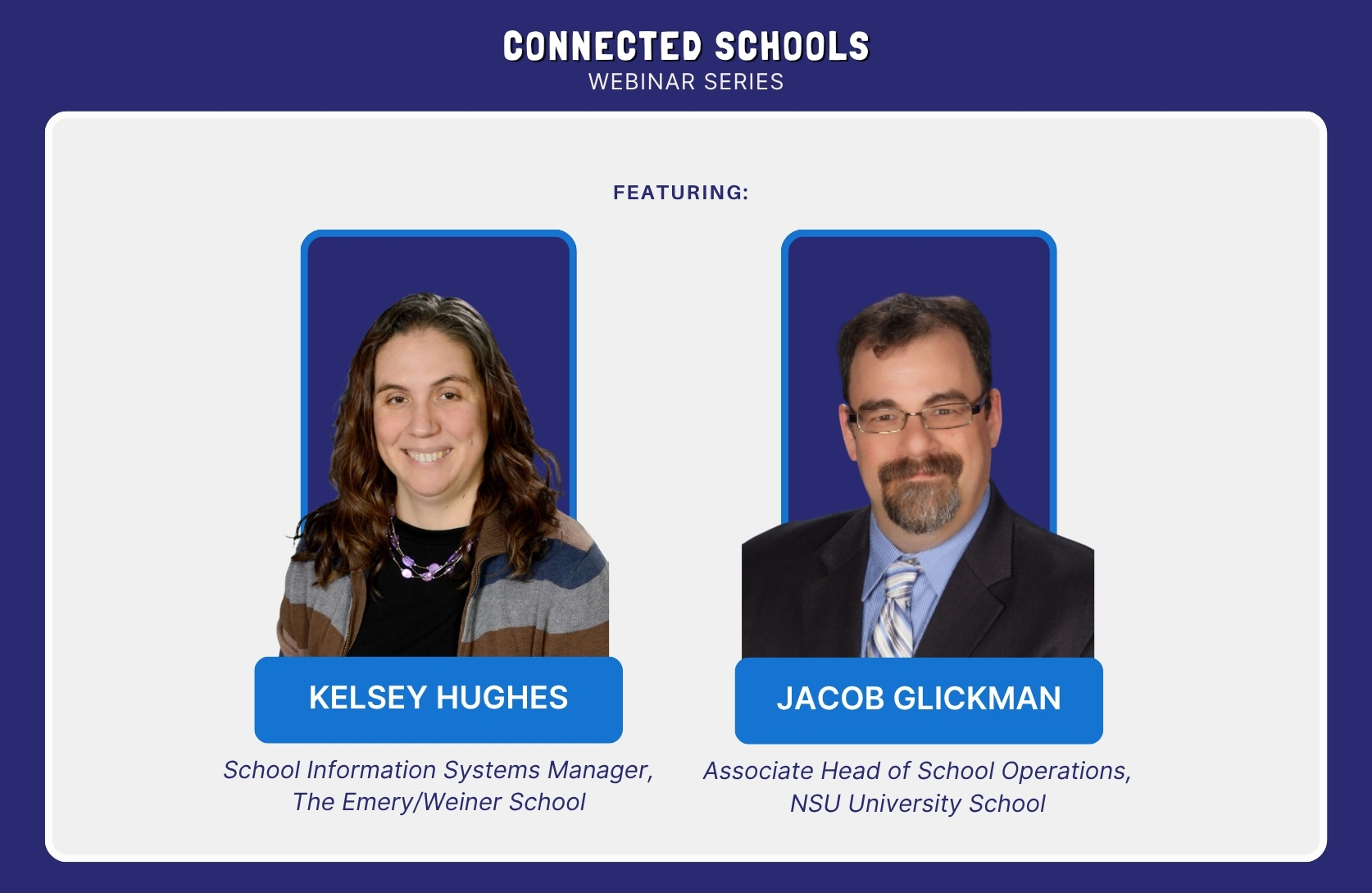
Allison Wilkins, Director of Educational Technology and Innovation at St. John's Parish Day School, a pre-K through fifth grade school of roughly 300 students in Ellicott City, Maryland, described exactly this worry going in, and what happened instead once families started using the system during a busy spring event.
"None of those worries that we had about parents feeling like it took away from the small school community came true. They all were very impressed with the system."
She also noted something instructive about the cases that did not go perfectly. When a parent's license scan produced a name conflict that required a second look, the response was not frustration. Families were glad the school was checking.
Part of what makes that possible is keeping a person in the process. A kiosk does not replace the friendly face at the front desk. The front desk staff member still greets visitors, still says hello, still guides people through what is now a short and predictable step. The technology handles the record; the person handles the relationship.
That distinction matters more than any specific feature. Schools that frame a visitor process as replacing hospitality tend to run into resistance. Schools that frame it as freeing the front office from a clipboard tend not to.
Surprise Is the Friction Point, Not Security
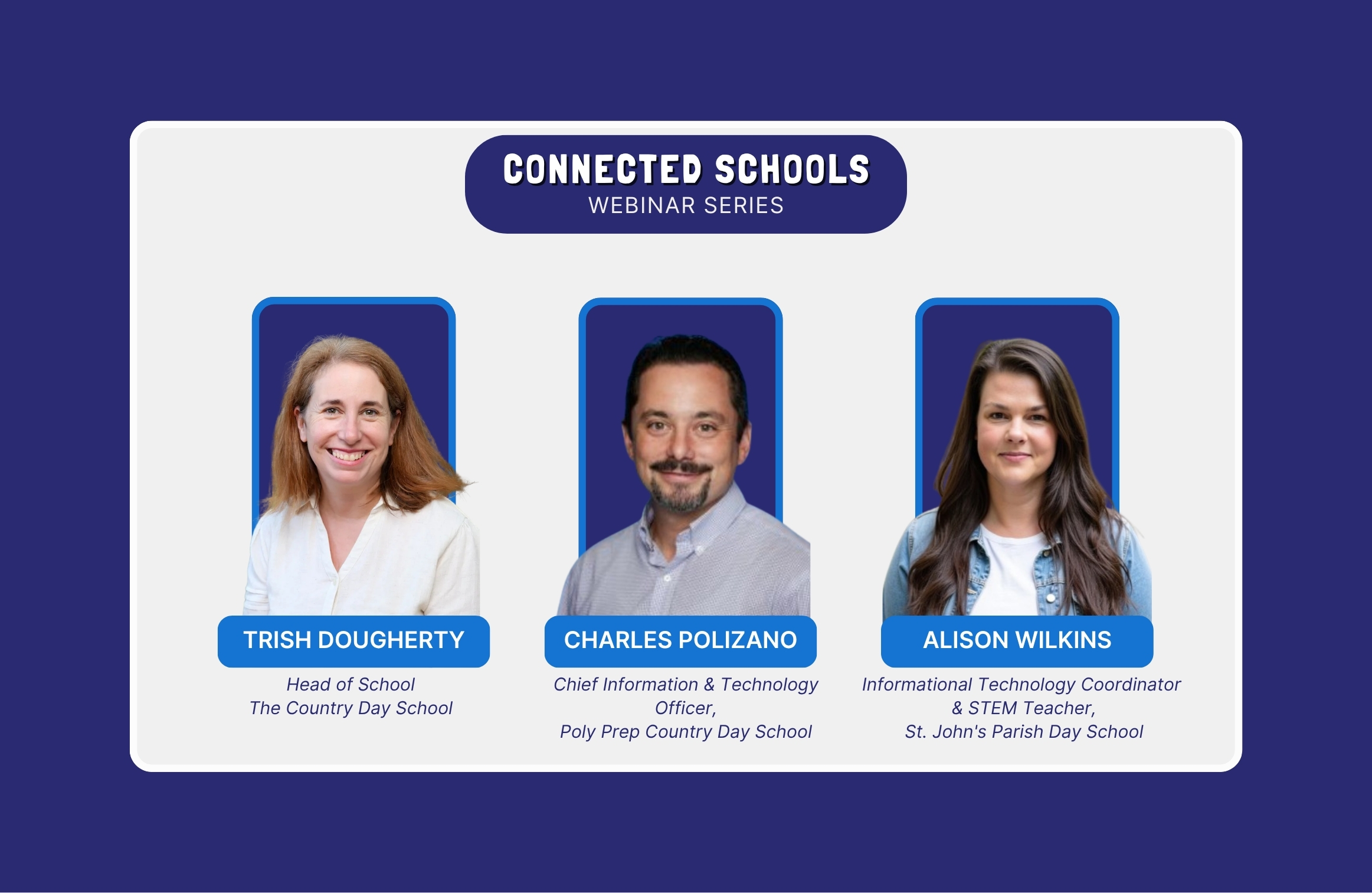
If there is a single insight worth carrying into your own planning, it may be this one, from Charles Polizano, Chief Information and Technology Officer at Poly Prep, an N through 12 school with two campuses in Brooklyn, New York:
"I've yet to meet anyone that is unhappy about security. It's just when they're surprised by it that tends to be a little bit problematic."
That reframes the communications work considerably. The goal is not to persuade your community that access matters. Most families already believe it does, and many raise it with school leadership unprompted. The goal is to make sure no one encounters a new expectation for the first time at the front door.
Practically, that means telling people what to bring before they arrive. It means letting families know to come a few minutes early for a large event. It means preparing the parent whose name is on a building or a field for the same process as everyone else, in advance, warmly, and with an explanation of why the school is not making exceptions.
Who Belongs in a Visitor Management Decision
Because this is as much a communications and hospitality question as a security one, the group that makes the decision matters.
The people who will operate the system every day belong at the table from the beginning, not at the end. So does someone from technology, since a visitor process usually needs to connect to your student information system and, ideally, to how you account for people during an emergency.
Beyond that, three roles are easy to overlook and worth including:
- Admissions, because open houses and tours are where a clunky first impression costs the most.
- Advancement, because longtime donors, trustees, and alumni are among your most frequent visitors and the most likely to be caught off guard.
- Marketing or communications, because the announcement is the part that determines how the change lands.
Getting buy-in from those stakeholders early means they can communicate the change to their own audiences in their own voice, which is far more effective than a single all-school email.
A Process, Not a Project
One more thing worth naming: this work does not conclude. A policy that works beautifully when nine visitors arrive for a lower school class looks different when 800 people come for an open house across two sessions. Campuses change, events change, and the plan changes with them.
That is not a shortcoming. It is the normal shape of operational work at a school, and there is some relief in accepting it. As Trish Doherty, Head of School at The Country Day School in McLean, Virginia, put it when describing how new visitors respond to a more formal process:
"They aren't going to look at it as a negative. It's really going to just show how seriously we're taking the safety of our students and our adults."
Visitor Management helps independent schools account for visitors alongside the students and staff already on campus, so the picture of who is present holds together whether it is 11:00 a.m. on a Tuesday or 5:15 p.m. before an evening event. But the technology follows the conversation, not the other way around. If your school is at the beginning of this, the first step is not a vendor call. It is getting the right people in a room.
Watch the Full Conversation
Three schools at three very different points in this process joined our August Connected Schools session to talk candidly about what has worked and what is still open. Watch Open Door, Closed Gaps →

Latest articles

Ruvna on the Road, Coming to a Campus Near You

What The First Six Weeks Of School Can Tell You That June Can't