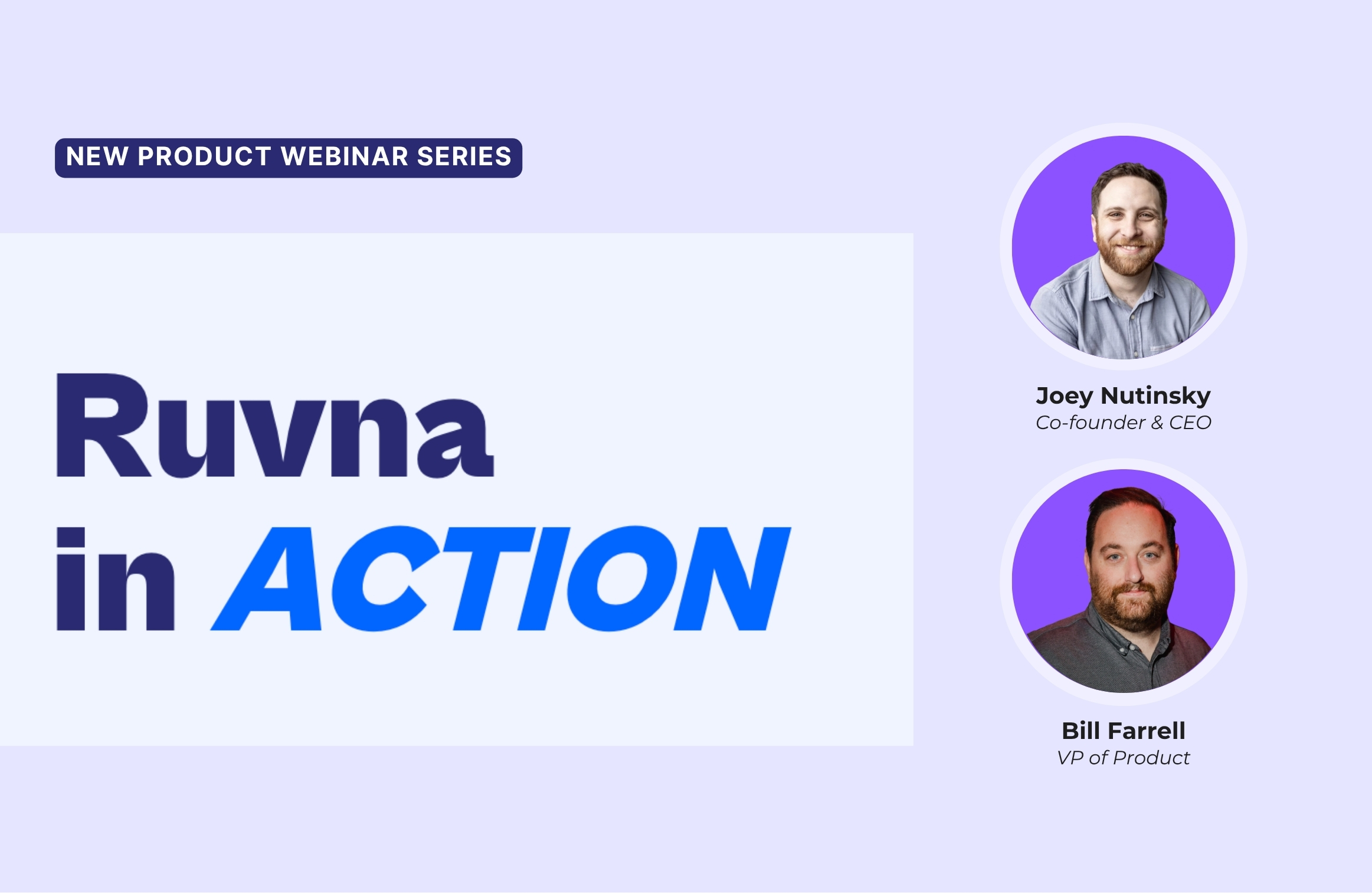
On July 30th, we hosted the first session of Ruvna in Action, a new webinar series.
If you have joined us for Connected Schools, you know those sessions are conversations between independent school leaders, deliberately not about our product. This series is the opposite by design. No theme, no panel, just the product in detail with Joey Nutinsky, co-founder and CEO, and Bill Farrell, VP of Product.
The plan was to walk through one school day live, from morning attendance to the last bus. Before the demo started, Joey framed why the session was built that way, and it turned out to be the thread running through everything that followed.
Five modules, one platform, and all of them answer the same question. Where is every person on my campus right now, and who is accountable for them?
Why the Answer Usually Depends on Who Reconciled What
The answer to that question is only ever as current as the systems it comes from.
Attendance lives in one place. Visitors live in a binder or a separate kiosk vendor. Dismissal lives in a spreadsheet that two people understand. Emergency response lives in a binder and a radio. Each one works.
As Joey put it, "When those live in 5 different systems or 4 systems with a clipboard, the answer is only ever as good as the last time someone reconciled all that information by hand."
At an independent school, that reconciling is usually not a team. It is one Director of Operations who also owns dismissal, or an office manager covering the front desk while running the attendance report. Lean staffing is a feature of the model, not a flaw in it, and it means the reconciliation falls to a person who has other responsibilities that same hour.
So the question worth asking of any platform is not which features it has. It is whether the answer holds up at 2:47 on a Thursday without someone stitching it together first.
Three Moments Where the Seams Should Have Shown
Some of the most telling moments in the session were the ones where nothing happened, which is the point.
Early in the session, Joey marked a student absent from the attendance dashboard. Routine. Later in the simulated day, during a lockdown drill in accountability, that student was already accounted for. No staff member went looking. No one radioed a name that was never on campus. The morning decision carried forward into the afternoon emergency without anyone repeating it.
At 3:00, a student was picked up in the car line and marked dismissed. Bill then opened the math tutoring roster, where that student had been expected, and the absence was already explained with the pickup location attached. The tutor did not need to make a phone call to find out.
And if an event begins mid-dismissal, students who have already left in a car or on a bus are marked off site. They are safely gone, which means they are not sitting in a missing column while someone searches a hallway for them.
None of those three are features you would find on a comparison chart. They are consequences of attendance, dismissal, and accountability reading from the same data. That is the part a screenshot cannot show and a feature list cannot explain, and it is the reason the session was built as one continuous day rather than five module tours.
Where Judgment Stays with a Person
One moment cut the other way, and it deserves attention.
A first-time visitor checked in at the kiosk and got a message asking him to see a staff member. Behind that, a background check had returned several potential registry matches on a common name. Background checks are part of Ruvna's Visitor Verification add-on, alongside Trusted Visitors and Prohibited Visitors.
Joey was deliberate about the word potential. The system did not make a decision or accuse anyone. It flagged something for a human to review and notified security staff at the same time, and a person compared the kiosk photo against the matches before approving entry.
Shared data is what makes the routine parts routine. It is not a substitute for someone's judgment at the moments that require it, and it should not try to be. The point of removing reconciliation work is to leave more room for the calls only a person can make.
What Schools Asked
That specificity showed up again in the questions people sent in. What scanning in looks like for younger students, where a kiosk line does not work the way it does in the upper school. What happens when students are off campus at lunch. How background checks are configured, and which registries they actually cover. Whether a school running access control on a separate system can connect it. Joey and Bill worked through each of these live.
Frequently Asked Questions
Does Ruvna track student locations?
No. Ruvna does not track or store where a student physically is. Ruvna keeps a student's attendance status (present or absent) separate from whether they're on or off site, and both are set by actions like scanning in, scanning out, or being dismissed. Ruvna also offers an optional location-based check-in: the location data never leaves the student's device, school staff sees only whether a student has checked in and not where they are, and it's entirely up to the school whether to enable it and up to the student whether to use it.
TL;DR - Ruvna tracks a student's status, not their location. Optional check-in uses location on the student's own device, and staff see check-in status only.
What is Ruvna in Action?
Ruvna in Action is our live product webinar series, where our team walks through the platform in detail, one workflow at a time. It's separate from Connected Schools, which brings independent school leaders together to talk through what they're navigating and isn't about our product. Each Ruvna in Action session also covers the newest releases, so there's always something new to see.
Can Ruvna connect to the systems our school already uses?
Yes! Ruvna is built as an open platform, so it works alongside the tools your school already runs instead of replacing them. Webhooks let Ruvna connect to things like door locks, digital signage, and mass notification systems, and more technical or custom integrations can be set up during your implementation. If there's a specific system you're wondering about, our team is happy to talk through what's possible.
How does Ruvna keep attendance and emergency accountability in sync?
Attendance, dismissal, and accountability all sit on the same data, so a decision made in the morning carries through the rest of the day automatically. A student marked absent at morning attendance is already accounted for if a drill happens that afternoon, with no one re-entering names or reconciling lists between separate systems.
TL;DR - one platform, one source of truth, so you're never stitching information together by hand during an emergency.
What happens to students who are off site or already dismissed when a drill starts?
Students who've been marked off site or already dismissed, like those who left in a car or on a bus, are shown that way automatically and don't land in your missing column during a drill. Ruvna knows they're safely off campus, so your team isn't searching for students who were never there to begin with.
How does Ruvna handle visitor background checks?
When a visitor checks in, Ruvna's Visitor Verification add-on can screen them against sex offender registries and other criminal databases and flag any potential matches for a staff member to review. Ruvna doesn't make the decision or turn anyone away on its own. It flags a potential match and notifies your security staff, and a person reviews it before approving entry.
What We Took from the Room
We scheduled a mid-July product webinar expecting a small group and found more than 100 people who wanted to spend a July afternoon in the details. What that afternoon confirmed for us is simple. The value is not in any one module. It is in what happens when attendance, dismissal, and accountability read from the same data, so the answer to who is on your campus, students, staff, and visitors, holds up without anyone reconciling it by hand.
That is what we tried to show, and it is why Ruvna in Action will continue as its own series, with future sessions going deep on individual modules. Connected Schools will keep doing what it does, which is putting independent school leaders in conversation with each other.
If you want to see the workflows run rather than read about them, that is what the recording is for. Watch the full recording of the first Ruvna in Action webinar, including everything new in the rebuilt web app and the complete Q&A.
Latest articles

What The First Six Weeks Of School Can Tell You That June Can't
The Drill That Teaches You the Most Isn't the One That Goes Perfectly