Last week, Ruvna CEO and co-founder Joey Nutinsky joined ATLIS for a session called “Saying Yes Carefully: Encouraging AI Experimentation Without Buying the Hype.”
Joey sees the AI conversation from both sides. As a software company, Ruvna is deliberate about what goes into our product and what stays out (more on that below). As a buyer, Joey gets pitched AI tools like everyone else. He’s the one on our team who evaluates them and decides what we use, what we pay for and what we say no to. The whole session came from that lens.
Prefer to watch? The full session is linked here.
Here’s the idea he asked everyone to hold onto:
“Trying an AI tool and keeping one are two very different decisions. When you treat them as one, it’s easy to end up saying no to both.”
The trap is judging a quick experiment by the standards of a long-term purchase. Adding a vendor means a contract, a data agreement, training, and renewals. If every “let’s try this” has to clear that bar, most of them never get tried at all. You end up with no experiment and no product, and no better sense of what your school actually needs.
So make trying cheap, and make keeping a decision.
What’s Actually Under the Hood
Most AI products right now are what Joey calls wrappers. Only a handful of companies build the actual models. Everyone else licenses one, writes a careful system prompt, puts an interface on top, and sells it. In a lot of the pitches landing in your inbox, the man behind the curtain is a well-written system prompt running on a model the vendor rents from someone else.
That isn’t a criticism. A great system prompt takes real work, he knows that firsthand, and some wrappers are absolutely worth paying for. They maintain integrations so you don’t have to; they can hold data you can’t easily rebuild, and they take on risk and maintenance that would otherwise be yours. But once you know where the value lives, you get to ask better questions.
Joey walked through an example he pulled off his own Mac. Highlight a paragraph in Apple’s writing tools, click “Make This More Professional,” and your text goes to a model with an instruction that says, essentially, rewrite this in a professional tone. Apple’s real contribution is the convenience: a button where you’re already working, a prompt they’ve written and tested and tuned, a model they chose for the job, and the plumbing that swaps the result back in. Those are real conveniences, and for a free feature built into a laptop, it’s great. But the part doing the actual thinking is the same thing you already have access to.
Every AI product breaks down into the same four pieces (hang on, let me have Claude make you a visual).
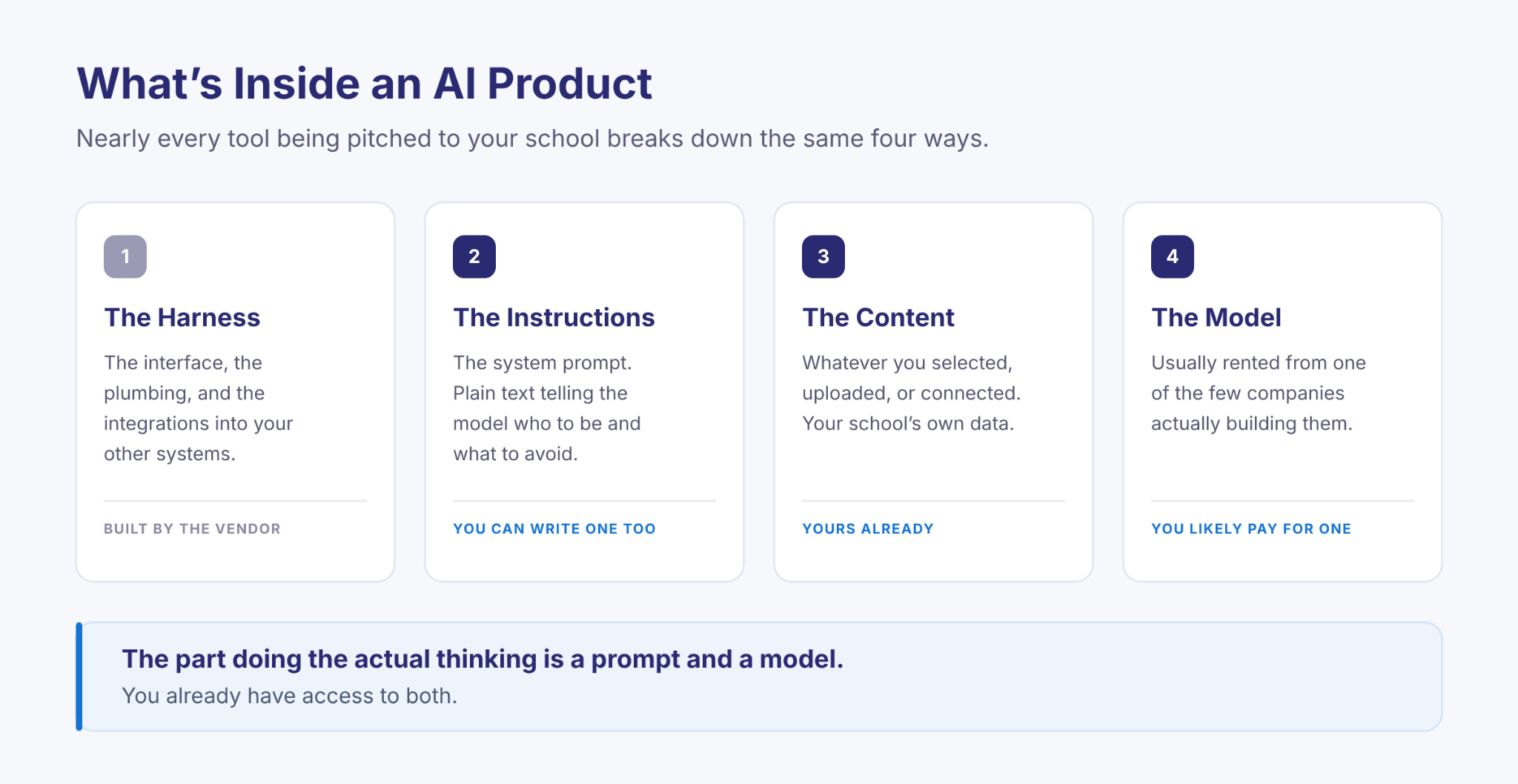
Apply that to the pitches in your inbox. Behind an essay feedback tool, the system prompt probably says something like “act as a teacher and give constructive feedback instead of just fixing mistakes,” and then attaches the assignment details, the grading rubric, and the student’s essay. A lesson plan generator has the template, your standards, and instructions on how to format the output. These products aren’t bad, and they aren’t easy to build well. But looked at this way, the core of a lot of them is something you can understand, and in many cases, something you can try yourself.
Where Joey Landed
The market is unsettled. The labs are in growth mode and pricing to win customers, new models arrive every few weeks, and plenty of what’s in your inbox today probably won’t exist in a year. But sitting it out isn’t a neutral choice. Staff are already using these tools, with or without a plan, which mostly means that use moves into personal accounts nobody can see.
“So the real question isn’t whether AI gets used at your school; it’s where it happens.”
At Ruvna, we keep experimenting easy and keep commitment decisions separate. Everyone on our team is on our team plan, so nobody has to ask permission or expense a personal subscription. Using AI for internal work is fine as long as the quality bar doesn’t move: if you wouldn’t put your name on it, don’t send it. And when something gets pitched to us, we try building a rough version ourselves first.
That building usually happens through skills. A skill is a set of written instructions, plus any reference files it needs, saved in your AI workspace so anyone on the team can run it. The example that drew the most interest was one Joey runs every week.
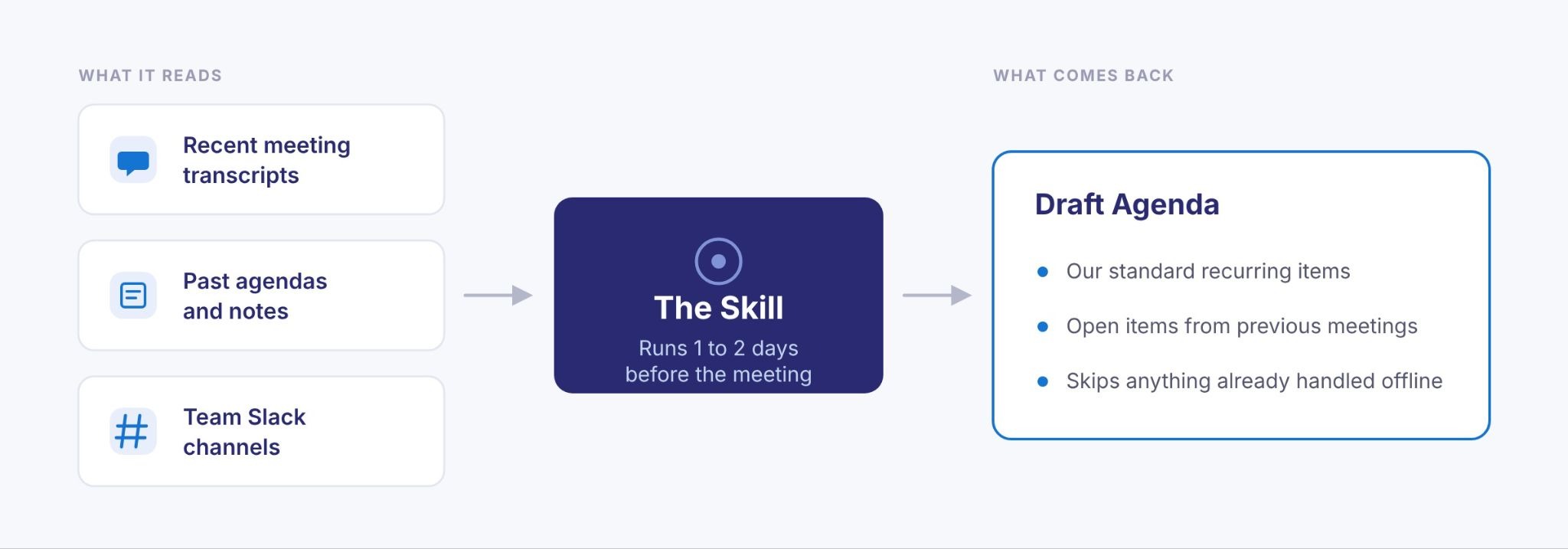
Before Ruvna’s leadership team meeting, that skill reads recent meeting transcripts, agendas, notes and Slack channels, then returns the standing items, the open items and what’s already been handled offline. The point isn’t that every school needs a meeting-agenda tool. It’s that hundreds of vendors sell products to do exactly this, and we do it with a text file and a subscription we already have.
What the Room Asked
The chat stayed busy for the full hour, and almost none of the questions were about whether to use AI. They were about the harder mechanics underneath it:
- How do you compare one AI provider against another when feature sets shift every few weeks?
- Can staff use whichever tool they prefer while the school still keeps control of its data?
- Are the new network-level tools that monitor AI usage worth paying for?
- What do enterprise privacy agreements actually protect, and what happens to your data terms if your vendor gets acquired?
The phrase of the day was “stack creep.” One attendee summed up the tension behind it: you want teachers to come back from a conference and try what they just saw, but someone on the back end has to track it, secure it, maintain it and pay for it. The host noted that many independent schools are handling this by rolling out whatever their existing stack offers, with Gemini for Google schools and Copilot for Microsoft schools, while a smaller group runs R&D under guardrails.
That exchange showed where this conversation stands right now. Nobody in the room was asking whether AI belongs in their school. They were asking how to stay open to what’s good without building a stack nobody can maintain. The full discussion is in the recording.
One More Thing, Since We’re a Vendor Too
An attendee asked how Ruvna avoids scope creep with AI, since so many software companies are stretching beyond what they actually do. Joey’s answer was direct: we haven’t integrated AI into our product, and that’s a deliberate decision rather than a gap we haven’t gotten to yet.
He can think of features that would demo beautifully. We could put a model behind Announcements to help draft your message when you’re sending a mass staff notification. But demoing well isn’t the bar. The bar is whether a school should be paying Ruvna for it, and on that question, we don’t think the answer is yes.
That’s the same discipline we’re suggesting you apply to the vendors in your inbox. We hold our own roadmap to the question we think every school should be asking: is this solving a real problem, or is it keeping up with a trend? Taking the long view has meant passing on features that would have been easy marketing wins. We think the schools we work with are better served for it.
Watch the Full Session
This post covers the through line, but the session went further than we could fit here. Joey walked through what actually happens inside a model between the moment you hit send and the moment you get an answer, the four ways to connect your own AI to the data it needs, and how we make AI wins visible internally at Ruvna. The back half was all Q&A, including longer answers to the questions above.

Latest articles
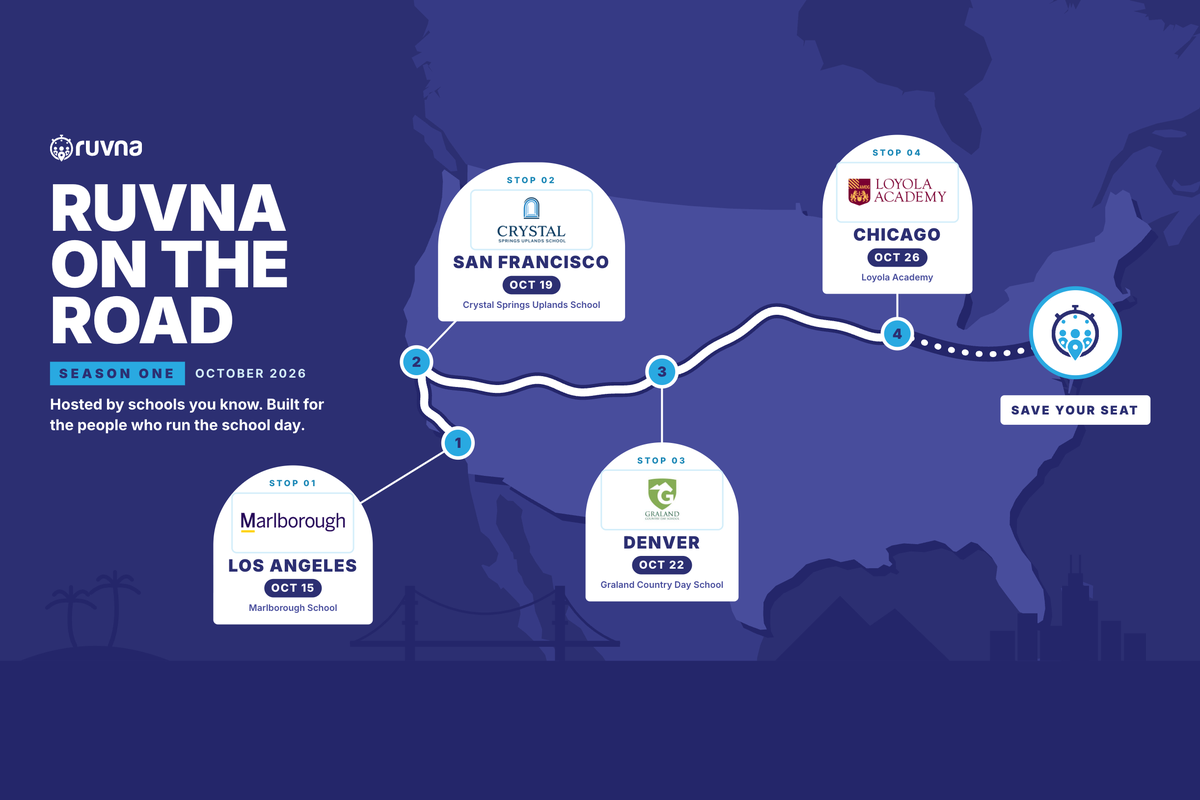
Ruvna on the Road, Coming to a Campus Near You

What The First Six Weeks Of School Can Tell You That June Can't