Independent schools are uniquely positioned to lead on campus safety. That's not a marketing claim — it's a structural reality. The governance flexibility, mission-driven cultures, and tight-knit communities that define independent education create conditions that support strong, sustainable safety programs in ways that are difficult to replicate in larger, more complex systems.
But being positioned to lead and actually leading are two different things. The schools that move from advantage to action tend to follow a recognizable pattern. Not a rigid checklist, but a set of practices that make the most of what independent schools already have.
Start With What You Already Know
The most effective independent school safety programs don't begin with a technology purchase or a policy overhaul. They begin with an honest assessment of what's already working.
Most independent schools have more going for them than they realize. Staff who know students well enough to notice when something feels different. Front office teams who can identify an unfamiliar face on campus. Faculty who feel comfortable raising concerns because they trust the people around them. These aren't small things — they're the foundation of a safety culture, and they're worth acknowledging before layering anything new on top of them.
Starting from existing strengths shapes everything that follows. It creates more constructive conversations with staff, a more grounded approach to evaluating new tools, and a clearer sense of where focused investment will have the most impact.
Build Safety Into the Rhythm of Daily Operations
One of the most important shifts independent school safety leaders make is moving away from treating safety as an event and toward treating it as an ongoing practice woven into daily operations.
Because independent school communities are smaller and communication is more direct, it's genuinely feasible to make safety a regular part of staff conversations without it feeling like an imposition. A brief check-in during a faculty meeting. A quick debrief after a drill. A standing agenda item during new staff onboarding. These moments don't require significant time or resources, but they build the collective awareness and shared ownership that makes a safety program truly resilient.
Technology supports this shift when it's chosen well. Platforms that staff interact with every day for attendance, visitor check-in, and announcements become familiar in a way that emergency-only systems never do. This is exactly why Ruvna is designed as a daily-use platform, not just an emergency response tool. When staff are already comfortable with the system they'll rely on during a crisis, the learning curve disappears when it matters most.
Friends Select School experienced this firsthand. When their new middle school attendance manager joined with no prior attendance management experience, she had developed her own confident workflow within a week — no lengthy training sessions, no formal onboarding. When the right tool fits the way a school already works, adoption takes care of itself.
Involve Your Community Early and Often
Independent school communities are engaged by nature. Parents choose these schools intentionally, faculty bring deep commitment, and staff often build years of irreplaceable institutional knowledge. That engagement is a genuine asset in safety planning, but only if it's actively invited.
Schools that build safety programs collaboratively tend to see stronger results. Faculty with input into a drill protocol take it more seriously. Parents who understand the school's emergency communication approach follow it more reliably. When safety planning reflects the same collaborative spirit that defines independent school culture, the whole community becomes better prepared.
Choose Tools That Fit Your Culture
Technology adoption works best when the tools chosen fit naturally into the way a school already operates. That means prioritizing platforms intuitive enough for staff to use confidently from day one, and systems that consolidate attendance, visitor management, emergency accountability, and announcements rather than adding complexity.
Every independent school approaches safety differently. Some are just beginning to formalize their approach, others are refining systems built over years. What they share is a culture of care, connection, and intentionality that makes strong safety programs feel less like a mandate and more like a natural extension of who they already are.
Recognize what's already working. Build safety into daily life. Engage your community. Choose tools that fit. Independent schools that follow that path don't just build better safety programs; they build programs that feel authentic to who they are.
Ruvna integrates attendance, visitor management, announcements, and emergency accountability into one platform designed to fit the culture and scale of independent education.
See how it works at schools like yours. Schedule a demo.

Latest articles
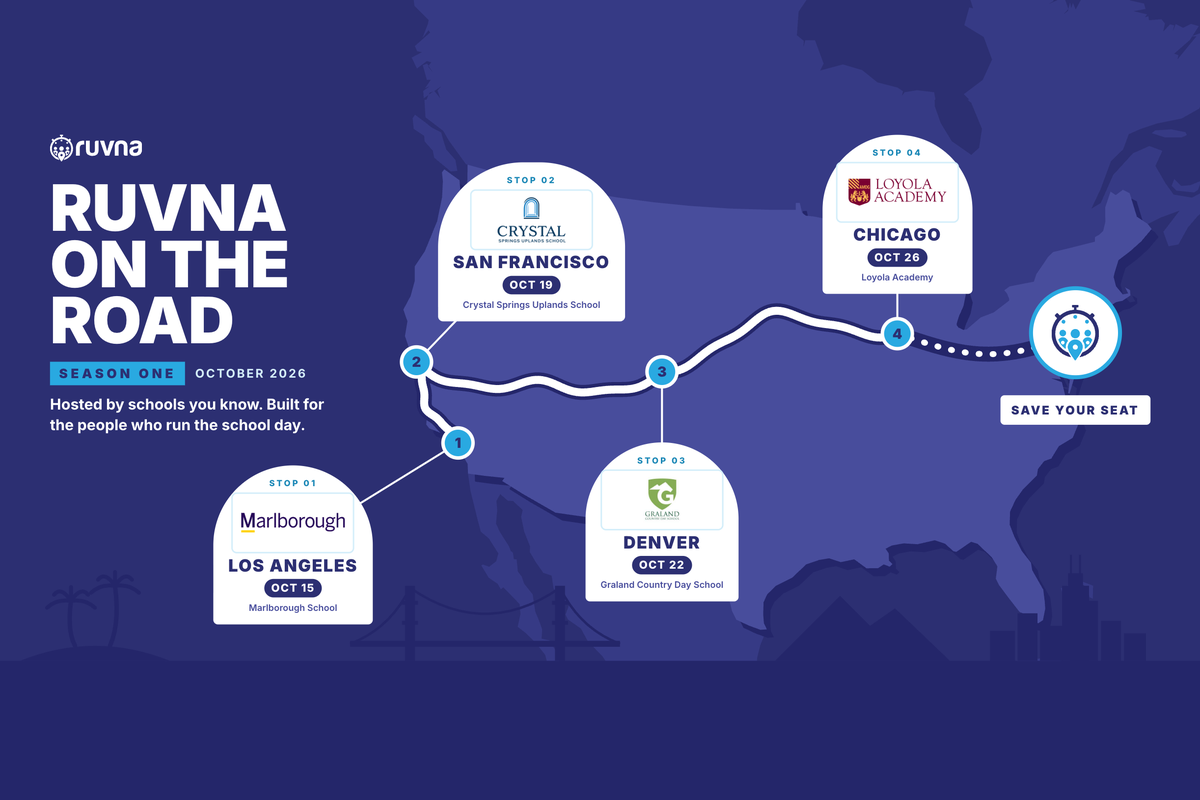
Ruvna on the Road, Coming to a Campus Near You

What The First Six Weeks Of School Can Tell You That June Can't