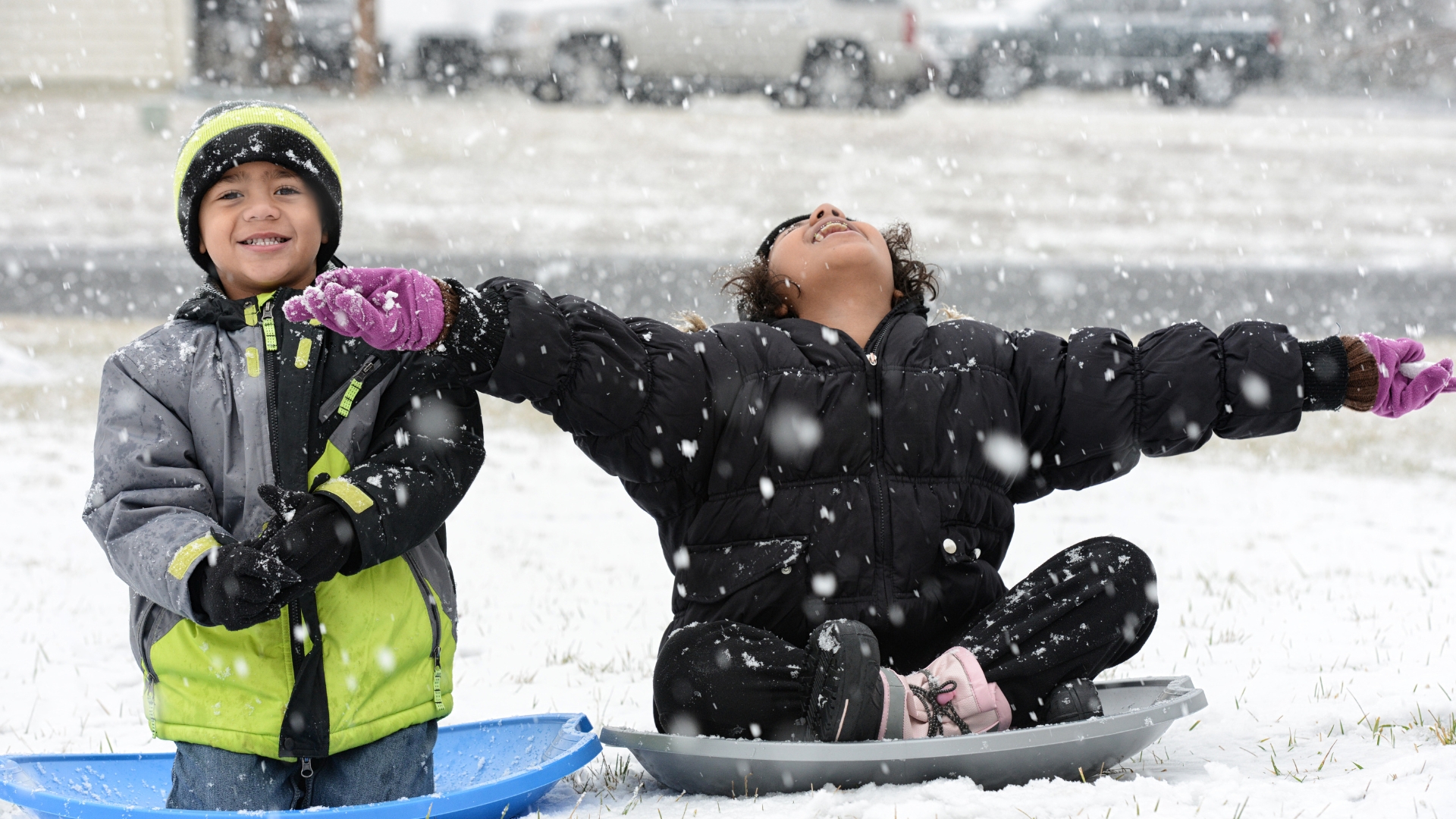
Alex Ladstatter, Director of Communications & Enrollment Management at The Country Day School in Northern Virginia, faced a familiar scenario last week. Northern Virginia's first major snowfall of the season was approaching, and like other schools in the area, they needed to announce a two-hour delay. The decision itself was straightforward, but communicating it quickly and reliably to every family before they started their morning routines? That's where the real challenge begins.
"Thank you to Ruvna's Announcements option for helping us deliver the exciting, yet extremely important information to our Country Day Community in a timely manner!" Alex shared on LinkedIn following the announcement.
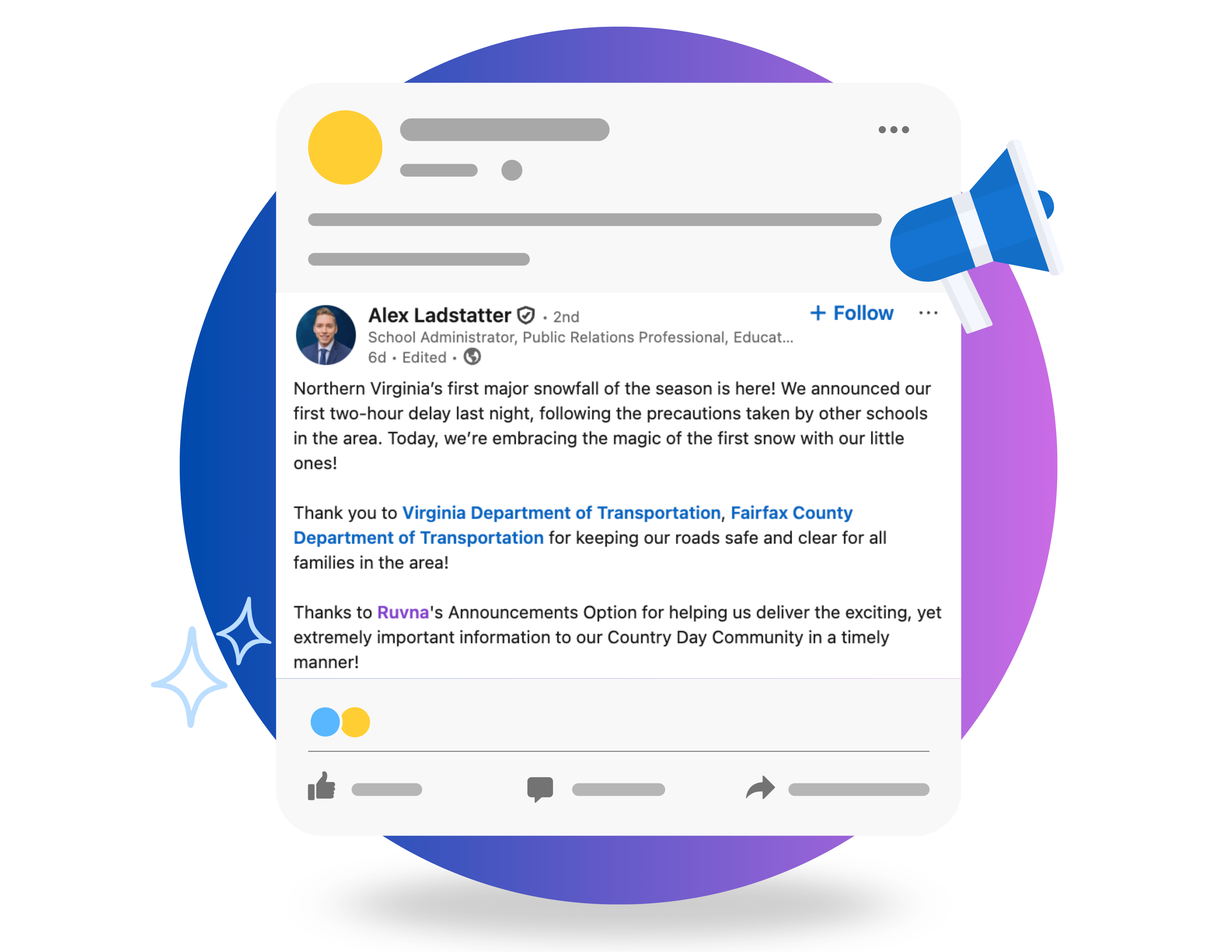
That phrase, “exciting, yet extremely important” captures something essential about winter weather communication in independent schools. Yes, snow days carry a certain magic, especially for young students. But behind that excitement lies genuine urgency. Parents need immediate information to adjust work schedules, arrange childcare, and make safe transportation decisions.
Why Winter Weather Communication Gets Complicated
When winter weather arrives, the communication challenge extends far beyond making the initial closure or delay decision. Your families might live spread across multiple counties or regions, each experiencing different road conditions and weather severity. Some rely on school transportation while others commute individually. Working parents need maximum advance notice to secure alternative arrangements.
For independent schools, there's an added layer of complexity. Unlike public school systems where families expect to follow district-wide closure decisions, your school makes autonomous choices based on your specific circumstances and community needs. This independence is valuable, but it also means your families depend entirely on you for timely, accurate information.
Here's what many administrators discover: how you communicate during these moments shapes how families experience your school's care and organization. When parents receive smooth, professional communication during a snow delay, they feel confident in your leadership and prepared to adjust their day accordingly.
When Technology Actually Simplifies Your Work
You already have your decision-making process figured out. You know who makes the call, when announcements need to go out, and what information families need. The challenge isn't the process itself, it's executing that process quickly and reliably when you're managing multiple urgent priorities at once.
This is where having the right communication technology makes a tangible difference in your daily work. When you can draft a message once and deliver it simultaneously across email, text, and phone calls, you're not spending precious minutes logging into multiple systems. When you can prepare announcements the night before and schedule them to send at a specific time, you're not requiring someone to be at their desk at 5:30 AM to manually hit send.
Schools that handle weather communication smoothly often mention how much easier it becomes when technology supports rather than complicates their established processes. One of the most practical features? Writing and saving message templates for common scenarios. When the decision is made, you're not composing from scratch under pressure. You're pulling up your pre-written closure or delay message, making any necessary adjustments, and sending it out immediately.
Reaching Families Through Multiple Channels Simultaneously
Think about your own communication habits for a moment. Do you check email first thing in the morning, or do you see text messages immediately when you wake up? Maybe you rely on app notifications to catch important updates. Your families are just as varied in how they prefer to receive urgent information.
The most effective winter weather communication uses multiple channels simultaneously. This approach reaches families through whatever method they're most likely to see quickly, and it provides critical backup if one system experiences delays.
This is exactly where modern communication platforms designed specifically for schools make a practical difference. Rather than logging into separate systems to send emails, then text messages, then app notifications, then make phone calls, integrated announcement systems let you compose one message and deliver it across all channels at once.
Schools using Ruvna Announcements can send mass notifications to their entire community in moments. Alex's experience at The Country Day School demonstrates this capability in action. When Northern Virginia's first major snowfall required a two-hour delay, they could announce that decision to every family quickly and reliably.
The real value often appears in more nuanced situations. If morning conditions allow school to open but afternoon forecasts look concerning, you might need to notify only families who use afternoon transportation. When facility issues related to weather affect only certain grades or divisions, you can communicate precisely with those families without creating confusion for others.
Beyond the Immediate Crisis: What Communication Systems Build
When families receive clear, timely information during weather emergencies, something important happens beyond the immediate logistics. They develop confidence in your school's leadership and operational systems. They see that your school can make good decisions and communicate them effectively under pressure.
This confidence extends far beyond weather events. Parents who experience smooth, professional communication during winter storms feel reassured that your school will communicate just as effectively during any situation requiring quick coordination.
As Alex noted in his LinkedIn post, The Country Day School's announcement was both "exciting" and "extremely important." Schools that can deliver urgent operational information while maintaining their community's distinctive voice demonstrate the kind of institutional competence that families value deeply.
Preparing Now for Winter Weather Ahead
Testing your communication systems before you actually need them makes an enormous difference. Schedule a practice announcement and use it to verify that messages reach families successfully. You'll discover any issues with contact information, platform functionality, or staff familiarity while there's still time to address them.
The schools that mention the smoothest weather communication experiences often point to having streamlined the technical execution. Saved draft announcements for common scenarios. The ability to schedule messages in advance. Checklists built into the platform itself. When you have technology that handles the logistics, you can focus your energy on the decision itself rather than the mechanics of getting the message out.
As we move deeper into winter, take some time to evaluate your current weather communication technology. Can you reach every family within minutes through multiple channels from a single message? Can you prepare announcements in advance and schedule them to send at specific times? Can you target specific groups without creating confusion for the broader community?
The Country Day School's experience offers a practical model. When Northern Virginia's first major snowfall arrived, they had systems in place to communicate their two-hour delay decision quickly and reliably. Their families received timely information through Ruvna's Announcements, allowing everyone to adjust their morning plans appropriately.
Your families depend on you to keep them informed when weather disrupts normal schedules. Having technology that supports rather than complicates that communication makes all the difference.
See How Other Virginia Schools Are Transforming Their Communication
The Country Day School isn't alone in discovering how the right technology strengthens school communication. Read how St. Anne's-Belfield School, another Virginia independent school, uses Ruvna's Announcements to keep their community informed and connected. Their story offers practical insights into what integrated communication looks like in action.

Latest articles

The Independent School Guide to the Standard Response Protocol and Standard Reunification Method
.jpg)
The Moments That Mattered: Ruvna’s 25-26 Year in Review