Most school administrators know the feeling: August arrives with its familiar chaos. Staff scrambling to finalize schedules, facilities teams racing against impossible deadlines, communication breaking down across departments, and that nagging sense that if you'd just started planning earlier, everything would feel more manageable.
Here's what many schools are discovering: the difference between August chaos and August confidence isn't luck or resources. It's what you do in January.
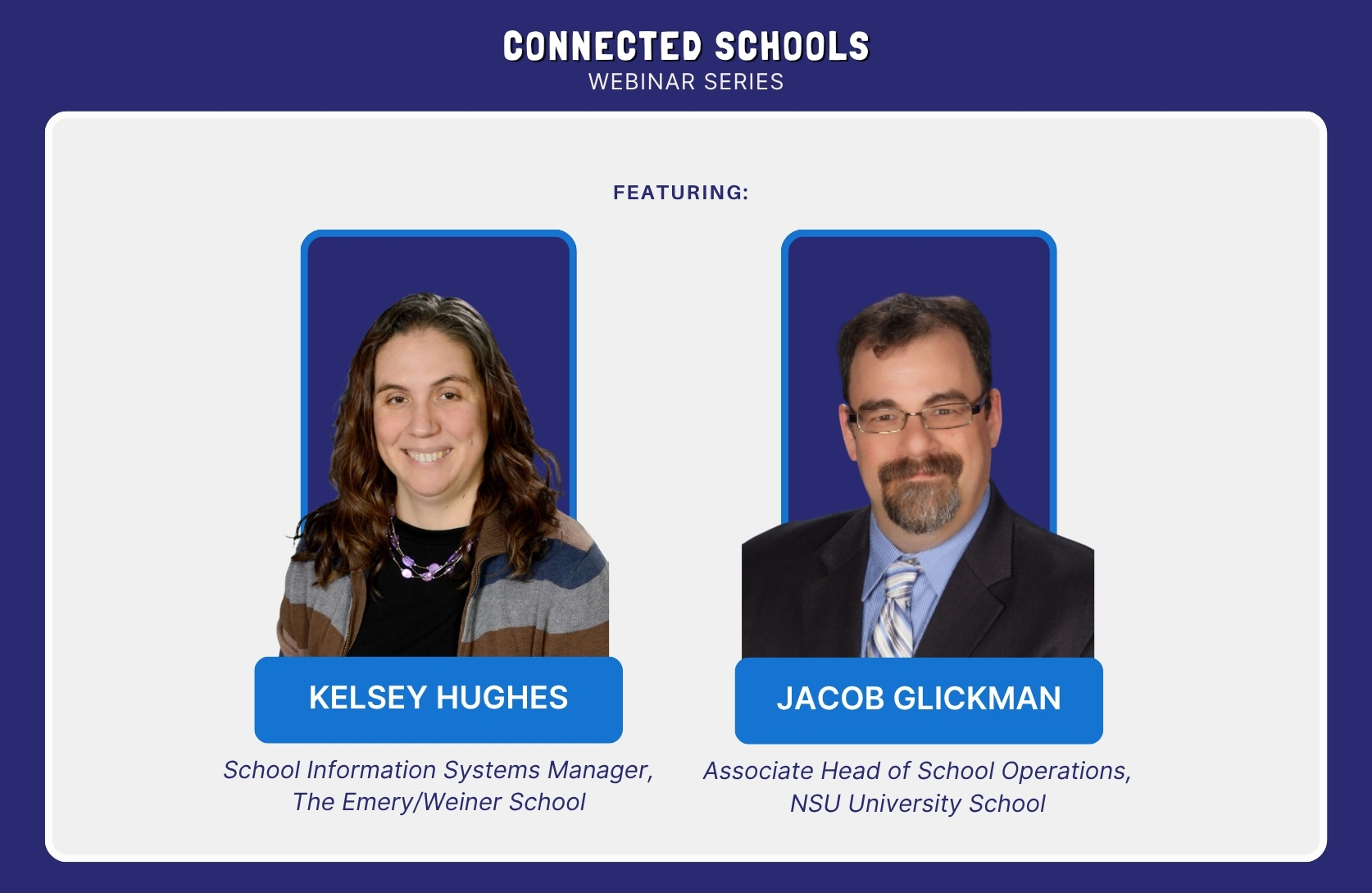
In our recent Connected Schools webinar, "Streamlining School Operations: Why January Planning Sets You Up for August Success," we heard from two school leaders who've learned this lesson firsthand. Dr. Eileen Corigliano, Head of School at Staten Island Academy, and Kent Messini, Director of Operations for Liberty Classical Schools, shared honest insights about why January represents a rare strategic opportunity that most schools overlook.
The January Advantage: Clarity Without Crisis
January offers something unique in the school calendar: you finally have a clear picture of your community without the pressure of immediate deadlines looming.
"January is the clearest picture that you're gonna have of your community," Dr. Eileen explained. "The honeymoon's over in September. Winter here in New York has kicked in in full force. The schedule has gone through an awful lot. The new children are no longer new. The new families have kicked in. So January is when you really get the clearest picture of your community."
This clarity matters because operational decisions made without understanding your actual community (not the theoretical one you planned for in summer) often create problems that compound throughout the year.
Kent emphasized this timing advantage from his experience supporting three schools in the Liberty Classical Schools network. By January, you can still remember what didn't work in the fall semester with enough clarity to fix it, but waiting until summer means that institutional knowledge has faded. The issues that surfaced during fall events, the bottlenecks that appeared during daily operations, the communication gaps that frustrated staff: all of these are fresh enough to address thoughtfully rather than reactively.
What January Planning Actually Looks Like
The schools that successfully use January for strategic planning aren't just thinking bigger. They're thinking more systematically about specific operational areas.
Calendar and Events: Building Excellence, Not Exhaustion
Both schools emphasized that comprehensive calendar planning in January prevents the burnout that comes from reactive event scheduling.
At Staten Island Academy, Dr. Eileen's team completes their entire academic calendar by mid-January for the following school year. But this isn't just marking opening and closing dates. It's a careful exercise in balancing community needs across divisions. They consider which families have children in multiple divisions, which staff members serve across departments, and which facilities will be needed for various events.
Kent's team at Liberty Classical Schools takes a similar approach, reviewing the entire events calendar each January and reassigning ownership of events based on lessons learned.
This intentional pacing serves a deeper purpose.
"We wanted to do things with excellence," Kent explained. "If we really got ambitious with every Friday there's some kind of event, we realized people would just get burnt out. Backing things up a little bit allows us to be very intentional about making those things better."
Budget and Enrollment: Preparing for Multiple Scenarios
Dr. Eileen highlighted how January budget planning at Staten Island Academy includes creating multiple scenarios: best case, worst case, and most likely case when looking at budgets and enrollment.
"If it does surprise you in August, you're not surprised. You've done that exercise. You've worked the numbers from staffing to enrollment to budget," she noted.
This scenario planning transforms potential August crises into manageable adjustments. When you've already mapped out staffing adjustments for different enrollment numbers, you're not scrambling in late summer. You're executing a plan.
For small independent schools with rolling admission, this approach is particularly valuable. Families move, circumstances change, and enrollment fluctuates. Having already thought through how to adjust various levers means you won't be caught off guard when reality doesn't match your best-case projections.
Safety and Communication: The Foundation for Everything
When asked about prioritizing operational challenges, both leaders immediately pointed to safety. Not as a compliance checkbox, but as the foundation that enables everything else.
Dr. Eileen shared how she articulates her role to even her youngest students: "I always start with making sure that you feel safe, making sure that you feel good coming to school, and that's my primary job, and I genuinely believe that."
This extends beyond physical safety to include emotional and social-emotional safety throughout campus. This comprehensive view of safety shapes every operational decision.
Kent emphasized that safety planning directly connects to the school’s mission. The way his schools conduct drills, train substitutes, and communicate expectations all reflect their core values.
The Communication Challenge Everyone Faces
During the webinar, we polled attendees about their biggest operational challenges during back-to-school season. The overwhelming response? Communication and coordination across departments.
This resonated strongly with both panelists, who emphasized that the solution isn't more meetings. It's more intentional involvement in planning decisions.
Dr. Eileen stressed the importance of including people who have different perspectives across the school in planning conversations. Having facilities staff involved in calendar planning prevents the scenario in which six major events are scheduled in one week, overwhelming the team responsible for setup and breakdown.
Kent highlighted the importance of explaining the reasoning behind operational decisions rather than simply issuing mandates.
"We try to be really intentional about always communicating the why, why we're doing something and respecting the faculty or the staff's time," he shared.
When staff understand why a change is being made and see the data informing decisions, they become partners in implementation rather than reluctant participants.
Building Relationships That Make Systems Work
Perhaps the most important insight from both leaders was that successful operational planning depends on relationships, both internal and external.
For vendor partnerships, Kent compared the process to hiring. Schools need to invest time finding partners who truly understand the educational environment, not just vendors who happen to offer school-focused products. The right partners understand budget constraints, appreciate mission alignment, and adjust their approach to fit the school's unique culture. (We'll be diving deeper into how these vendor relationships build community trust in next month's Connected Schools webinar, "Trust as Your School's Strategic Advantage: How Vendor Partnerships Build Community Confidence.")
Dr. Eileen shared how Staten Island Academy involves multiple stakeholders when evaluating new systems. When they transitioned to a new learning management system, they created focus groups with faculty volunteers, invited parents to participate, and even consulted recent alumni to gain perspectives on what their college platforms offered. This collective approach meant that by the time they made a decision, the entire community had buy-in because they'd been part of the process.
This principle extends beyond major system changes. Dr. Eileen noted that she still teaches a class each year, which keeps her grounded in the day-to-day realities of using the same tools her faculty use. This hands-on approach helps her stay connected to the human experience of the systems she's responsible for implementing.
Starting Monday: Your One Focus
For school leaders feeling overwhelmed about where to begin, Kent offered clear guidance: evaluate everything through the lens of your mission statement. Every operational decision, from which drills you run to which vendors you select to which person serves school lunch, should align with your school's core mission and values.
This mission-aligned approach creates the consistency that builds trust within your community. Families who stay for years can see that decisions are being made with clear intentionality, not just convenience. Staff understand that their work contributes to something larger than checking off daily tasks.
The message is clear: January isn't just another month in the school calendar. It's your strategic window for creating the operational excellence that transforms August from chaos to confidence.
Ready to hear the complete conversation? Watch the full "Streamlining School Operations: Why January Planning Sets You Up for August Success" webinar recording to dive deeper into these insights and hear specific examples from school leaders who've figured out how to use mid-year planning to eliminate operational friction.

Latest articles

Ruvna on the Road, Coming to a Campus Near You

What The First Six Weeks Of School Can Tell You That June Can't