The next big meeting is approaching, and you know the conversation is coming. Budget discussions are heating up, strategic priorities are being debated, and somewhere in your folder sits a proposal that could transform your school's safety operations. The question isn't whether your school needs better safety technology. You already know it does. The real question is how to help your colleagues see what you see.
If you've been in school administration for any length of time, you've probably sat through budget meetings where well-intentioned colleagues ask perfectly reasonable questions: "Didn't we just invest in safety technology?" "How do we know this will actually make a difference?" "What happens if we wait another year?"
These aren't obstacles to overcome. They're opportunities to build genuine consensus around decisions that will serve your school community for years to come.
Understanding Different Leadership Perspectives
The most effective conversations about safety technology start not with technical specifications, but with understanding what matters most to different members of your leadership team. School administrators are fundamentally focused on stewardship: protecting the institution's mission, ensuring financial sustainability, and making decisions that serve both current and future students.
When colleagues approach safety technology investments with questions or hesitation, they're usually expressing three core concerns:
- They want assurance that proposed investments align with educational priorities rather than competing with them.
- They need confidence that technology solutions will deliver measurable value, not just peace of mind.
- They're seeking evidence that the team has thought strategically about implementation, not just acquisition.
Understanding these concerns changes how you frame the conversation entirely. Rather than starting with features and specifications, you begin with institutional outcomes and community benefits.
Speaking Each Leader's Language
Your head of school wants to hear how safety technology supports enrollment and parent confidence. Lisa Ha of Saint Anne's Belfield notes that reliable emergency communication "strengthens the overall relationship between school and community" because parents trust that they'll receive clear, timely information.
Your CFO needs concrete numbers. Point to measurable time savings like The Pingry School's experience: they reduced emergency drill time from 35 minutes using "paper and pen" to 15 minutes with integrated systems. That's time staff can redirect toward educational priorities.
Your IT director is concerned about another system to maintain. Emphasize platforms that integrate seamlessly with your existing SIS. As one school leader noted, "If it's not talking to [our SIS], I don't think we can continue the conversation."
Your operations director wants to know about workflow efficiency.
Crystal Springs Uplands School saved approximately 10 minutes per emergency drill by eliminating "rolling milk crate full of binders and paper slips". These time savings compound across the school year.
These examples represent just a glimpse of the measurable outcomes schools achieve with integrated safety platforms. Explore detailed case studies from Saint Anne's-Belfield and other independent schools to see complete implementation stories, ROI calculations, and lessons learned that can inform your leadership discussions.
From Compliance Checkbox to Competitive Advantage
The leadership teams that reach enthusiastic consensus on safety technology investments are those that position these tools as strategic assets rather than compliance necessities. While regulatory requirements matter, they rarely inspire the kind of support that leads to robust funding and successful implementation.
Consider reframing the conversation around operational excellence. How will integrated safety systems reduce administrative burden and allow staff to focus more on educational mission? What message does comprehensive safety management send to prospective families evaluating schools?
The most compelling discussions connect safety investments to broader institutional goals. If your school values innovation, emphasize how modern safety platforms demonstrate forward-thinking leadership. If community is central to your mission, highlight how coordinated systems strengthen connections between stakeholders during both routine operations and challenging moments.
Getting Everyone on the Same Page Before the Big Meeting
Reaching unanimous agreement on safety technology isn't just about having the right data. It's about creating conversations that resonate with different perspectives around the table.
Start building understanding well before the formal decision meeting. Schedule individual conversations with colleagues to understand their perspectives and concerns. These are genuine listening opportunities that help you refine your thinking and anticipate questions.
When you do discuss as a full team, lead with outcomes rather than processes. Instead of explaining how emergency accountability systems work, describe what happens when staff can confirm everyone's safety in under three minutes. Rather than detailing communication platform features, paint the picture of parents receiving clear, timely updates during unexpected school closures.
"In terms of connected systems, it's actually first, not about the technology, but connecting with the people. So, who's going to be connecting what? It's all about the relationships within your school. You know who you have to go to, you know who it's going to impact, and you start those conversations early. But even before that, you're putting deposits in, so you can have those honest conversations when they come to you..." - Peter Antupit, CIO at Crystal Springs Uplands School
Use language that connects across different areas of expertise. Financial stewardship, risk management, operational efficiency, and strategic planning are concepts that translate across professional backgrounds and help colleagues apply their experience to the conversation.
Building a Collaborative Case with Evidence
The strongest decisions emerge when leadership teams combine institutional vision with concrete evidence. This means going beyond vendor specifications to demonstrate real-world impact and return on investment.
Start with your current state analysis as a team. How much time do staff spend on safety-related administrative tasks? What challenges do families experience during school communications? How coordinated are your current emergency procedures across departments and locations?
Explore comparison scenarios together that illustrate different paths forward. What happens if you maintain current systems for another two years? How do current operational costs compare to integrated platform investments?
Share insights from peer institutions, but choose examples thoughtfully. Leadership teams respond better to stories from schools with similar missions and operational challenges than to generic success metrics.
Having detailed information about implementation timelines, vendor evaluation criteria, and integration requirements demonstrates the thorough preparation that helps teams move from consideration to commitment. These strategic considerations transform conversations from theoretical discussions into actionable plans.
Addressing Shared Concerns Proactively
Even when leadership teams are generally supportive, colleagues will have practical questions about implementation, training, and long-term sustainability. The best approach is to address these concerns collaboratively before formal decisions need to be made.
Implementation timelines matter tremendously. Be specific about rollout phases, training schedules, and when the school community will see benefits. Schools that implement safety platforms during summer breaks start the academic year with systems already running smoothly.
Training and adoption concerns are equally important. The most reassuring answer involves ongoing partnership with providers who understand educational environments and can adapt to your school's specific needs.
Creating Sustainable Alignment
The goal isn't just reaching agreement on this year's budget. It's building lasting confidence in your collective technology leadership and strategic judgment.
Frame safety technology as part of your broader institutional technology strategy. How does emergency management integration support your academic technology goals? How do communication improvements enhance family engagement initiatives?
When leadership teams think systematically together about technology adoption, vendor relationships, and institutional capacity building, decisions become clearer and more confident.
The Partnership Approach
The most successful leadership teams frame safety technology investments as partnerships rather than purchases. This distinction influences everything from vendor relationships to community communication.
Partnership thinking emphasizes ongoing relationships over transaction completion. It highlights collaborative problem-solving rather than product delivery. It positions your school as an active participant in solution development rather than a passive consumer of standardized offerings.
This relationship-first approach transforms vendor conversations from sales pitches into strategic collaborations that serve your school's unique needs. When schools select vendors who approach relationships as true partnerships rather than transactions, they create foundations for successful long-term implementations that adapt and grow with their institutional needs.
Equipping Your Team for Success
As you prepare for crucial budget conversations, having comprehensive information available to your entire leadership team makes all the difference. The teams that reach unanimous decisions most effectively are those who can explore the full range of questions together: from evaluating vendor capabilities to calculating total cost of ownership, from assessing integration requirements to planning multi-year implementation strategies.
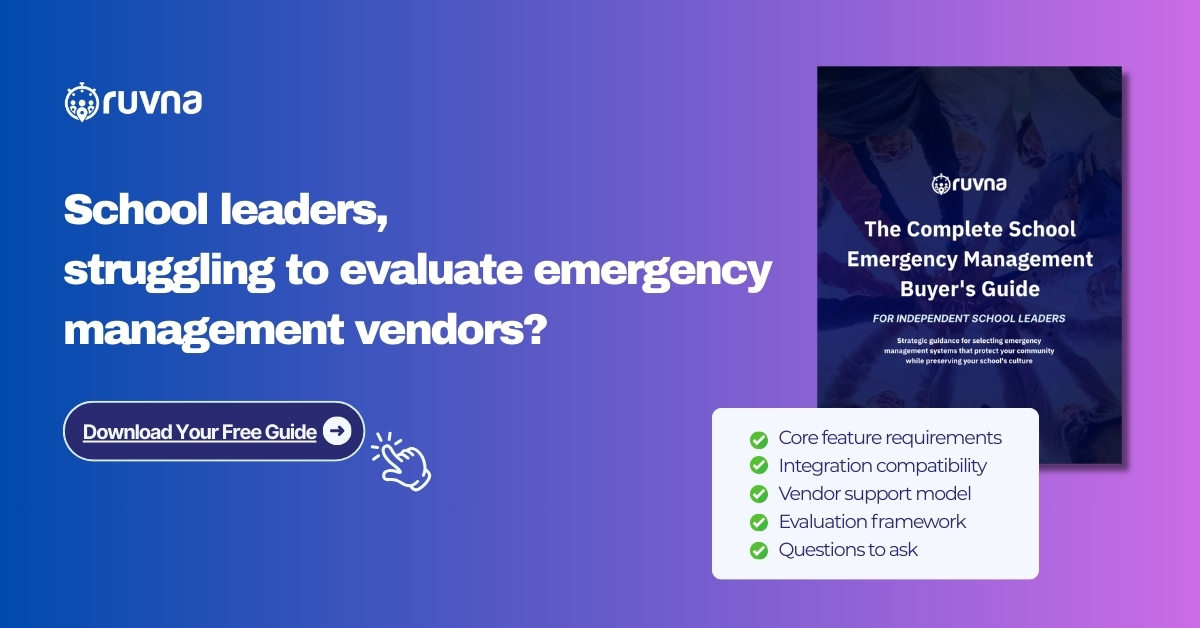
Ruvna's Complete Emergency Management Buyer's Guide provides exactly this kind of comprehensive framework. It walks through the evaluation criteria that matter most to leadership teams, addresses the implementation timeline questions that often shape decisions, and helps you build the evidence-based case that creates alignment among colleagues.
Whether your team includes heads of school, operations directors, technology leaders, or finance administrators, having this level of detailed information creates the foundation for confident, unanimous decisions.
Your upcoming leadership discussion represents more than a budget decision. It's an opportunity for your team to demonstrate the kind of strategic thinking that builds institutional confidence and positions your school for long-term success. When administrators work together to think comprehensively about safety, technology, and community relationships, they're investing in more than just new systems. They're supporting a shared vision that connects institutional values with practical capabilities.
Ready to build your compelling case for safety technology investment? Download Ruvna's Complete Emergency Management Buyer's Guide for a comprehensive resource to help you evaluate your options and make informed decisions about safety technology for your school.

Latest articles

The Independent School Guide to the Standard Response Protocol and Standard Reunification Method
.jpg)
The Moments That Mattered: Ruvna’s 25-26 Year in Review